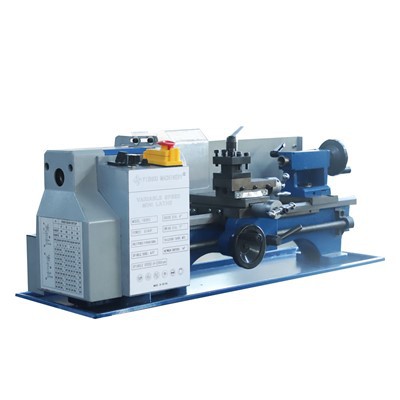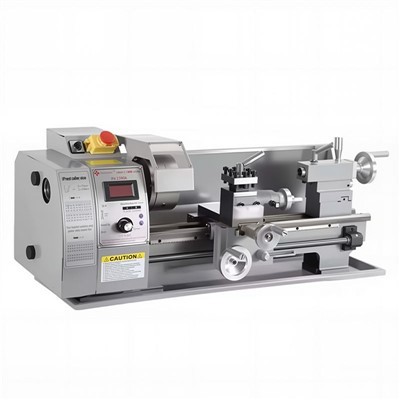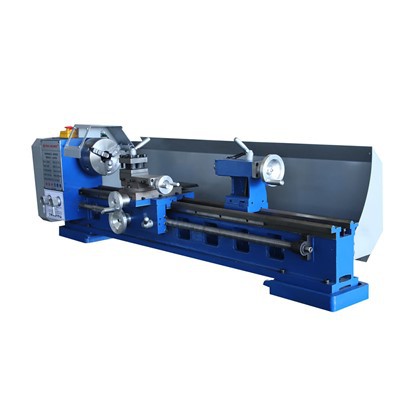
After the machine tool is installed and debugged, the manufacturer should be notified to send personnel to debug the machine tool. The main tests are as follows:
Various Manual Tests
a. Manual Operation Test: Tests the accuracy of manual operation.
b. Jogging Test
c. Spindle Gear Shifting Test
d. Overtravel Test
Functional Tests
a. Perform functional tests on the machine tool using buttons, switches, and manual operation. Tests the flexibility, smoothness, and reliability of the functions.
b. Select any spindle speed and perform continuous tests of spindle start, forward rotation, reverse rotation, and stop. Perform at least 7 operations.
c. Spindle high, medium, and low speed switching test. The allowable deviation between the commanded and displayed speed values is ±5%.
d. Select any feed rate and perform continuous working feed and rapid feed tests across the entire XZ axis stroke. The rapid feed should be greater than 1/2 of the full stroke. Perform at least 7 forward and reverse operations and continuous operations.
e. Perform low, medium, and high feed rate conversion tests across the entire X and Z axis travel. Conduct various indexing and clamping tests on the turret tool post.
f. Conduct sealing, lubrication, and cooling system tests to ensure no leakage.
g. Conduct clamping, releasing, flexibility, and reliability tests on the chuck.
h. Conduct forward, reverse, stop, and spindle speed change tests on the spindle.
i. Conduct forward and reverse indexing tests on the turret tool post.
j. Conduct low, medium, and high feed rate to rapid feed conversion tests on the feed mechanism.
k. Test the reliability and operational flexibility of functions such as feed coordinate overtravel, manual data input, position display, return to reference point, program sequence number indication and retrieval, program pause, program deletion, address line interpolation, linear cutting loops, taper cutting cycles, thread cutting cycles, circular arc cutting cycles, tool position compensation, pitch compensation, and backlash compensation.
Idle Run Test
a. The main drive mechanism operation test should be conducted for no less than 1 hour at the highest speed range. The spindle bearing temperature should not exceed 70℃, and the temperature rise should not exceed 40℃.
b. Continuous idle run test: The operation time should be no less than 8 hours, with each cycle lasting no more than 15 minutes. At the end of each cycle, stop the machine and simulate the release of a workpiece. The stop should not exceed one minute before resuming operation.
Load Test
The user prepares drawings and blanks of typical parts and, under the guidance of the manufacturer's commissioning personnel, programs and inputs the program, selecting cutting tools and cutting parameters. The load test can be conducted in three steps: rough turning, heavy cutting, and finish turning. Each step is further divided into single cutting and cyclic program cutting. After each cutting operation, the actual dimensions of the machined parts are checked and compared with the command values to verify the machine tool's operating accuracy under load conditions, i.e., the machine tool's overall machining accuracy and the turret tool post's indexing accuracy.
Acceptance
After the machine tool is unpacked and accepted, functional tests, idle run test, and load test are completed, and qualified products are produced, acceptance and handover procedures can be processed. If there are any problems, the manufacturer should be responsible for resolving them.