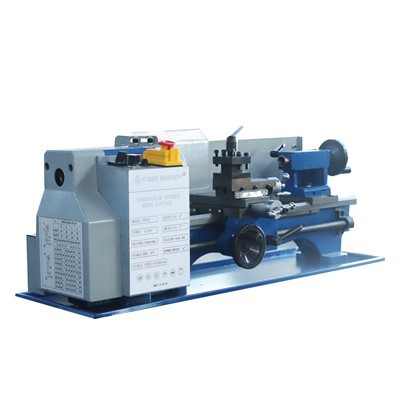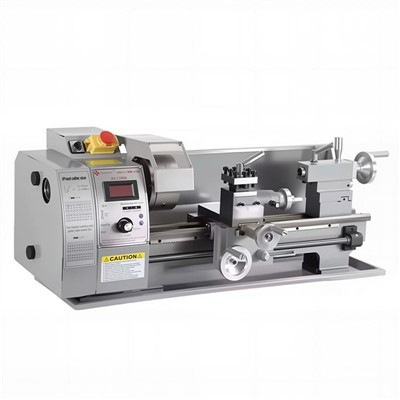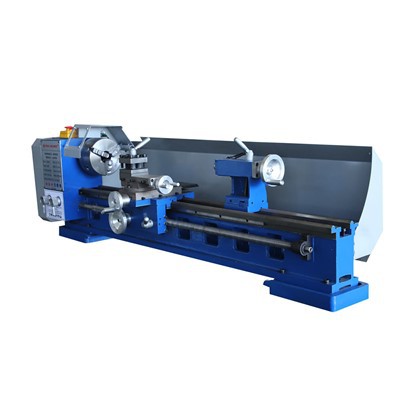
The normal operation of a CNC lathe must meet the following conditions: minimal power supply voltage fluctuations at the machine's location, an ambient temperature below 30°C, and a relative humidity below 80%.
Environmental Requirements: The machine should be located away from vibration sources, avoiding direct sunlight and heat radiation, as well as humidity and airflow. If there are vibration sources near the machine, anti-vibration trenches should be installed around it. Otherwise, the machining accuracy and stability of the machine will be directly affected, leading to poor contact and malfunctions in electronic components, thus impacting the machine's reliability.
Power Supply Requirements: CNC lathes are generally installed in machining workshops, where not only are ambient temperatures highly variable and operating conditions harsh, but the presence of various electromechanical equipment also causes significant power grid fluctuations. Therefore, the power supply voltage at the location where the CNC lathe is installed requires strict control. Power supply voltage fluctuations must be within the allowable range and remain relatively stable. Otherwise, it will affect the normal operation of the CNC system.
Temperature Conditions: The ambient temperature of the CNC lathe should be below 30°C, and the relative humidity below 80%. Generally, CNC electrical control boxes are equipped with exhaust fans or air coolers to maintain a constant or minimally variable operating temperature for electronic components, especially the central processing unit. Excessive temperature and humidity will reduce the lifespan of control system components and increase the likelihood of malfunctions. Increased temperature and humidity, along with increased dust, can cause adhesion on integrated circuit boards, leading to short circuits.
Proper Machine Tool Use: Users are not allowed to arbitrarily change the parameters set by the manufacturer within the control system. These parameter settings directly affect the dynamic characteristics of various machine tool components. Only the clearance compensation parameter value can be adjusted according to actual conditions.
Users must not arbitrarily replace machine tool accessories, such as using hydraulic chucks that exceed the specifications in the instruction manual. Manufacturers carefully consider the matching of parameters when setting accessories. Blindly replacing accessories can cause mismatches in parameters and even lead to unforeseen accidents.
The pressure of hydraulic chucks, hydraulic tool holders, hydraulic tailstocks, and hydraulic cylinders must be within the allowable stress range and must not be arbitrarily increased.